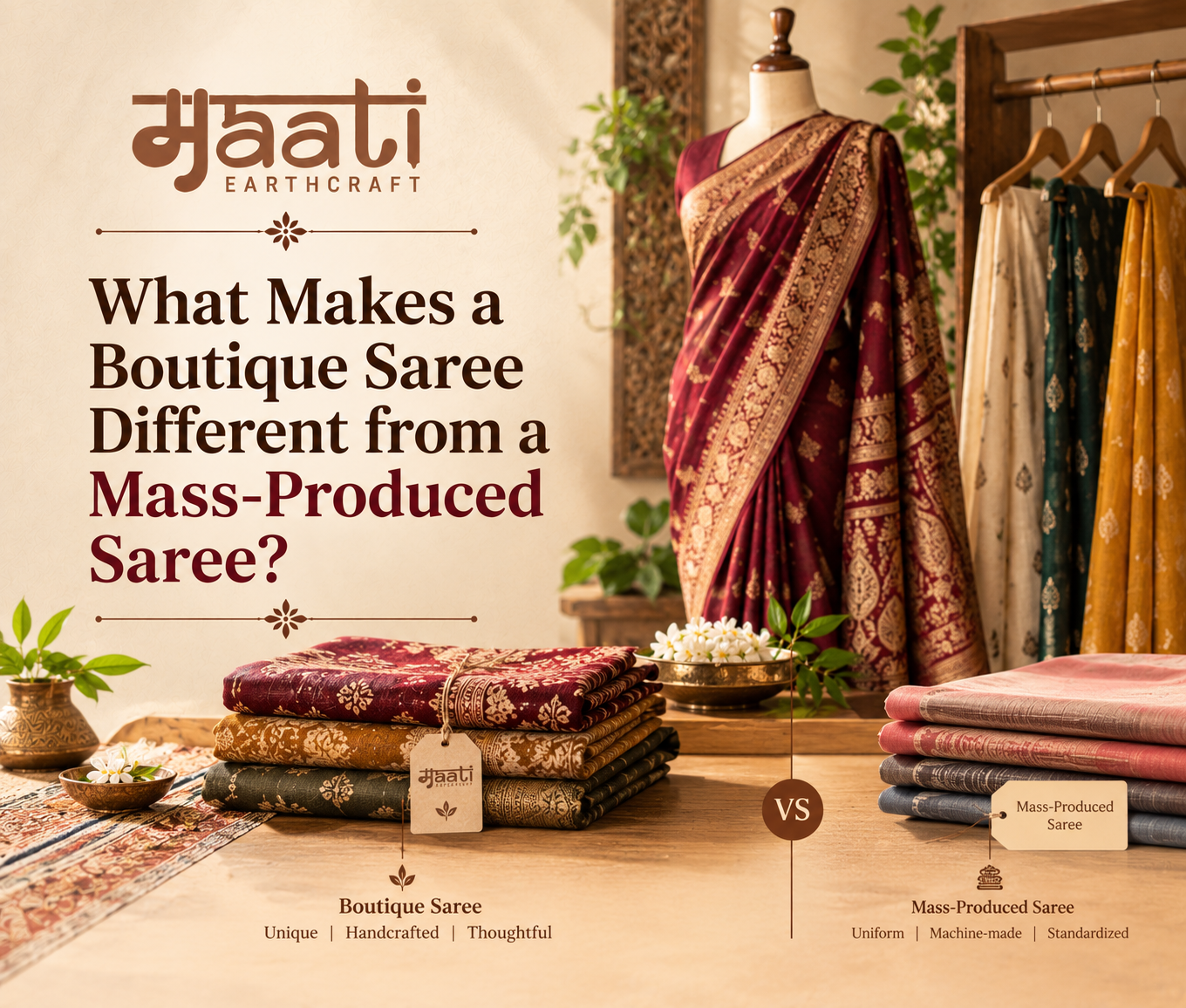
In a world where fashion is increasingly driven by fast trends and large-scale production, a saree holds a special place as a symbol of tradition, craftsmanship, and timeless elegance. Yet, when choosing a saree, one question often comes to mind: What makes a boutique saree different from a mass-produced saree?
The difference goes beyond appearance. It lies in the fabric, the weaving process, the attention to detail, the design philosophy, and the story behind the garment.
At Maati Earthcraft, we believe that a saree is more than just an outfit. It is a beautiful expression of cultural heritage, artistry, and the enduring charm of Indian textiles. For those who appreciate authentic craftsmanship and thoughtful design, understanding the difference between boutique sarees and mass-produced sarees can make choosing the right saree a more meaningful experience.
Craftsmanship that Tells a Story
One of the most significant differences between boutique sarees and mass-produced sarees is the approach to craftsmanship.
Boutique sarees often place greater emphasis on design details, fabric selection, and the individuality of each piece. When a saree is handwoven, its character comes from the skill and experience of the artisan who creates it. Subtle variations in texture, motifs, and weaving can make each piece distinctive.
Mass-produced sarees, on the other hand, are generally manufactured in larger quantities using standardised designs and production processes. This approach makes it easier to maintain consistency and offer a wide range of products at different price points.
Neither approach is inherently better for every shopper. However, for someone who values the artistry behind a garment, a carefully selected boutique saree can offer a deeper connection to the craft.
The Beauty of Bengal Handloom Sarees
Bengal has a rich textile heritage, celebrated for its distinctive weaving traditions, elegant motifs, and versatile fabrics. From everyday cotton drapes to intricately patterned Jamdani and traditional silk sarees, Bengal’s textile traditions offer something for different tastes and occasions.
Bengal handloom sarees are especially appreciated for the artistry involved in their creation.
Depending on the weave, these textiles showcase delicate floral motifs, geometric patterns, intricate borders, and elaborate pallus.
Popular Bengali weaving traditions include:
• Tant Sarees: Known for their lightweight feel, breathable cotton fabric, and distinctive borders, making them suitable for everyday wear and festive occasions.
• Jamdani Sarees: Celebrated for their intricate motifs and decorative patterns woven into the fabric.
• Baluchari Sarees: Recognised for their elaborate pallus, often featuring narrative and ornamental designs.
• Garad and Korial Sarees: Traditionally associated with Bengali ceremonies and festive dressing, particularly for those who appreciate classic silk drapes.
A boutique that specialises in Bengal handloom sarees may curate pieces that showcase these regional traditions while helping customers understand their unique characteristics.
At Maati Earthcraft, this appreciation for textile heritage reflects a broader belief: traditional sarees deserve to be understood, cherished, and worn beyond a single occasion.
Thoughtful Selection rather than Volume Alone
A boutique saree collection is often shaped by a particular aesthetic, cultural inspiration, or customer preference. Instead of focusing exclusively on producing large quantities, a boutique may carefully select sarees based on their colours, textures, patterns, fabric qualities, and overall appeal.
This curated approach can make shopping more personal. Customers may discover sarees suited to their individual style, whether they prefer understated cotton drapes, intricate handloom patterns, traditional Bengali designs, or elegant sarees for special occasions.
Mass-produced sarees generally follow a different model, with standardised collections designed to serve a larger market. This can provide greater availability, more uniform designs, and a broader selection at accessible prices.
The real distinction is therefore not simply boutique versus mass-produced. It is the difference between a collection built around thoughtful curation and one designed primarily for large-scale distribution.
Fabric Quality and Attention to Detail
The fabric plays a crucial role in how a saree looks, feels, and drapes.
A well-selected boutique saree may feature carefully chosen cotton, silk, or other traditional textiles. Attention may also be given to the finish of the borders, the alignment of motifs, the quality of the pallu, and the overall balance of the design.
However, it is important to remember that a boutique label alone does not guarantee superior quality. Similarly, mass-produced sarees can be well made, and handwoven sarees can vary in quality.
When shopping for a saree, look beyond the label and examine the details:
• Fabric composition: Check whether the saree is cotton, silk, a blend, or another material.
• Weaving technique: Ask whether the fabric is handwoven, powerloom-woven, or produced using another method.
• Motifs and borders: Observe the detailing, finishing, and consistency of the design.
• Drape and texture: Consider how the fabric feels and whether it suits your comfort preferences.
• Product information: Look for clear descriptions of the weave, origin, care requirements, and any applicable authenticity or certification details.
These simple checks can help you make a more informed purchase, regardless of where you shop.
A More Personal Shopping Experience
Shopping at a Bengali saree boutique can offer an experience that goes beyond selecting a colour or pattern.
A boutique may provide guidance on choosing the right saree for a wedding, a cultural celebration, a family gathering, or everyday wear. Customers may also receive suggestions on blouse combinations, jewellery, draping styles, and fabric care.
For someone unfamiliar with Bengal’s textile traditions, this guidance can be particularly valuable. Understanding the difference between a Tant and a Jamdani Saree, for example, can make it easier to select a piece that matches the occasion, personal style, and budget.
Mass-market shopping can also offer convenience and variety, especially for customers who already know what they want. The advantage of a boutique lies in the opportunity for a more curated and informative experience, depending on the seller.
At Maati Earthcraft, we believe that choosing a saree should be an enjoyable process in which customers can appreciate not only the finished garment but also the traditions and design sensibilities that inspire it.
Supporting Traditional Textile Heritage
For many saree enthusiasts, purchasing a handloom saree is also a way to appreciate India’s living textile traditions.
Handloom weaving can involve specialised skills passed down through generations, from preparing yarn and developing patterns to weaving intricate motifs. Supporting responsibly sourced handloom products may help sustain artisan livelihoods and preserve traditional techniques.
That said, not every boutique saree is handwoven, and not every mass-produced saree is made without craftsmanship. The most meaningful distinction comes from understanding how a particular saree was produced and whether its maker or seller provides transparent information about its origins.
When purchasing Bengal handloom sarees, consider asking about the weaving tradition, the artisan or production cluster, the materials used, and any available documentation. These details can help you appreciate the work behind the saree and make a more informed choice.
Price, Value, and Longevity
Boutique sarees can sometimes cost more than mass-produced alternatives, particularly when they feature intricate handwoven designs, specialised materials, or limited-production collections.
However, a higher price does not automatically mean better quality, and an affordable saree is not necessarily inferior. Value depends on several factors, including the fabric, weaving method, workmanship, design, durability, and transparency of the seller.
A thoughtfully chosen saree that suits your lifestyle and receives proper care can remain a cherished part of your wardrobe for years. Classic colours, versatile designs, and traditional weaves can also be worn across different occasions, making them practical additions to a long-lasting collection.
Rather than judging a saree by its price alone, consider what you are paying for and how well the piece meets your expectations.
How to Choose the Right Saree for You
Whether you are exploring a Bengali saree boutique or browsing a large retail collection, the best saree is one that suits your needs, preferences, and budget.
Before making your purchase, consider these questions:
What is the occasion? Choose lightweight cotton for comfortable everyday wear or explore silk and more elaborate designs for formal celebrations.
Which fabric do you prefer? Cotton, silk, and blended fabrics each have different textures, draping characteristics, and care requirements.
Do you value traditional weaving? If so, explore handloom sarees and learn about their specific weaving techniques.
Does the seller provide clear product details? Reliable information about materials, origin, and care helps you shop confidently.
Will you wear it often? Consider versatility, comfort, maintenance, and how easily the saree fits into your existing wardrobe.
The aim is not simply to choose the most expensive or exclusive saree. It is to find one that feels meaningful, looks beautiful, and serves you well.
Discover the Art of Sarees with Maati Earthcraft
A saree can be a statement of personal style, a connection to cultural heritage, or a treasured piece passed down through generations. Boutique sarees offer an opportunity to explore thoughtfully curated designs, while Bengal’s handloom traditions invite us to appreciate the skill, patience, and creativity behind every weave.
At Maati Earthcraft, we celebrate the enduring appeal of Indian textiles and the beauty of sarees that bring tradition and contemporary living together. We believe that understanding a saree’s fabric, craftsmanship, and story makes every purchase more rewarding.
Whether you are looking for an elegant everyday drape, a distinctive festive ensemble, or a traditional Bengali saree for a special occasion, take the time to explore the details and discover what makes each piece unique.
Because the beauty of a saree lies not only in how it looks, but also in the story it carries.
Explore Maati Earthcraft’s collection to discover sarees that reflect your style and your appreciation for timeless textile traditions.
Frequently Asked Questions
What is the difference between a boutique saree and a mass-produced saree?
A boutique saree is generally part of a curated collection selected around particular designs, aesthetics, or customer preferences. A mass-produced saree is manufactured in larger quantities using more standardised production processes. Either type can vary in quality and craftsmanship.
Are Bengal handloom sarees always handmade?
Handloom sarees are woven on looms operated by hand, although different stages of textile production may involve other processes. Always check the product description and seller’s information to confirm the weaving method of a particular saree.
Why are some boutique sarees more expensive?
Their prices may reflect the materials used, the complexity of the design, the weaving technique, the amount of labour involved, and the scale of production. Boutique pricing alone, however, does not guarantee superior quality.
Which Bengali saree is best for everyday wear?
Lightweight Tant sarees are a popular choice for everyday wear because of their breathable cotton fabric and comfortable drape. The best option depends on the specific fabric, weave, weather, and personal preference.
How can I identify an authentic Bengal handloom saree?
Check the fabric and weaving details, request clear information about the saree’s origin, and look for relevant product labels or certification where applicable. A trustworthy seller should be able to explain what is known about the saree’s materials and production.
Are boutique sarees suitable for gifting?
Yes. A thoughtfully chosen saree can be a meaningful gift for birthdays, weddings, anniversaries, festivals, and other special occasions. Consider the recipient’s preferred colours, fabric, style, and comfort when selecting one.