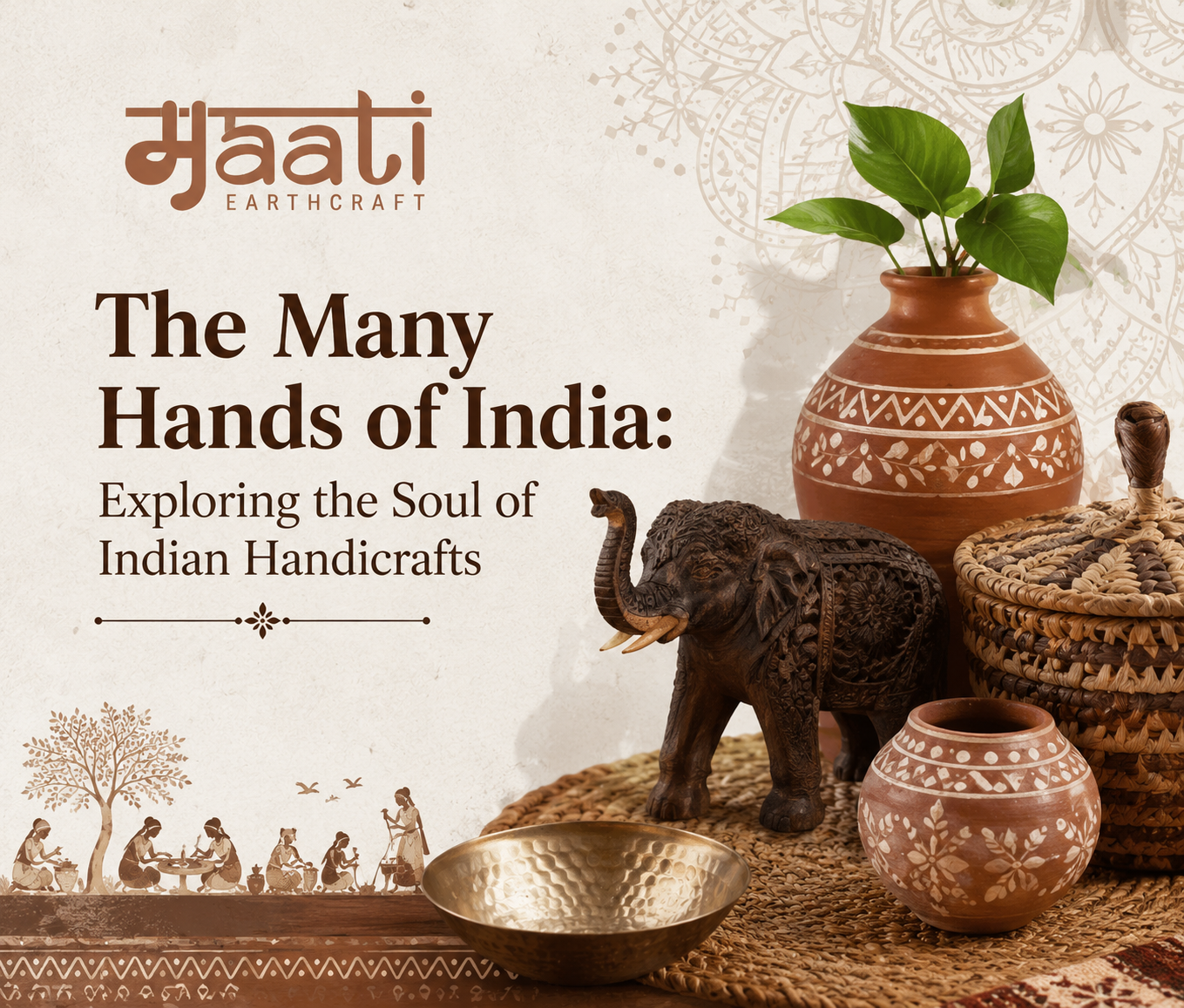
Before it becomes a piece, every craft begins as a story; the one shaped by generations of makers, traditions, and lived experiences.
A Dokra figurine shaped from molten metal. A Madhubani painting alive with intricate lines and vibrant stories. A delicate Sholapith creation, so light it almost feels like air. These are not simply objects. They are fragments of memory, culture, and generations of craftsmanship passed down through time.
Across India, handicrafts have always been more than decorative arts. They are living expressions of communities, landscapes, and traditions that have survived centuries of change. Every region has its own language of craft, spoken not through words, but through skilled hands.
In the tribal belts of West Bengal and Odisha, artisans continue the ancient practice of Dokra metal casting. Using the lost-wax technique, each piece is handmade and unique, carrying a legacy that dates back over thousands of years. The rough textures and earthy forms tell stories of rural life, folklore, and a deep connection to nature.
Travel east to Bengal, and you encounter the vibrant world of Patachitra. Traditionally painted on scrolls, these artworks blend storytelling with visual art. For generations, Patua artists have travelled from village to village, singing narratives while unfurling their painted scrolls. Every brushstroke preserves myths, local histories, and cultural memory in a way few art forms can.
Not far away, another remarkable tradition quietly flourishes. Sholapith craft, often called the “Indian ivory” of Bengal, transforms the soft pith of a marsh plant into intricate sculptures, ceremonial decorations, and artistic masterpieces. Delicate yet resilient, it reflects the extraordinary ability of artisans to create beauty from nature’s simplest materials.
Further north, the walls and courtyards of rural Bihar gave birth to one of India’s most celebrated art forms, Madhubani painting. What began as a ritual and domestic tradition evolved into a globally admired craft. Filled with motifs of nature, gods, animals, and daily life, Madhubani art captures the intimate relationship between people, spirituality, and their surroundings.
What makes Indian handicrafts truly remarkable is not just their diversity but their humanity.
Behind every handcrafted object is an artisan whose knowledge has been inherited through generations. These crafts are often learned at home, practiced in family workshops, and refined over decades. They are living traditions made by patience, skill, and an enduring sense of identity.
In an age of mass production, handmade crafts offer something increasingly rare: authenticity. They remind us that beauty does not emerge from machines alone but from human stories, cultural roots, and the quiet dedication of makers.
To explore Indian handicrafts is to travel through the soul of the country itself. Every woven thread, painted surface, carved detail, and moulded form carries the imprint of countless hands that have preserved these traditions against all odds. And perhaps that is the true value of Indian handicrafts, not merely in what they create, but in what they keep alive.
The story of Indian handicrafts is, ultimately, a story of people, of artisans who continue to create with patience, pride, and purpose. At Maati Earthcraft, we believe these stories deserve a place in modern lifestyle. Through every handcrafted piece, we invite you to bring home not just a handicraft, but a legacy shaped from culture, craftsmanship, and care.