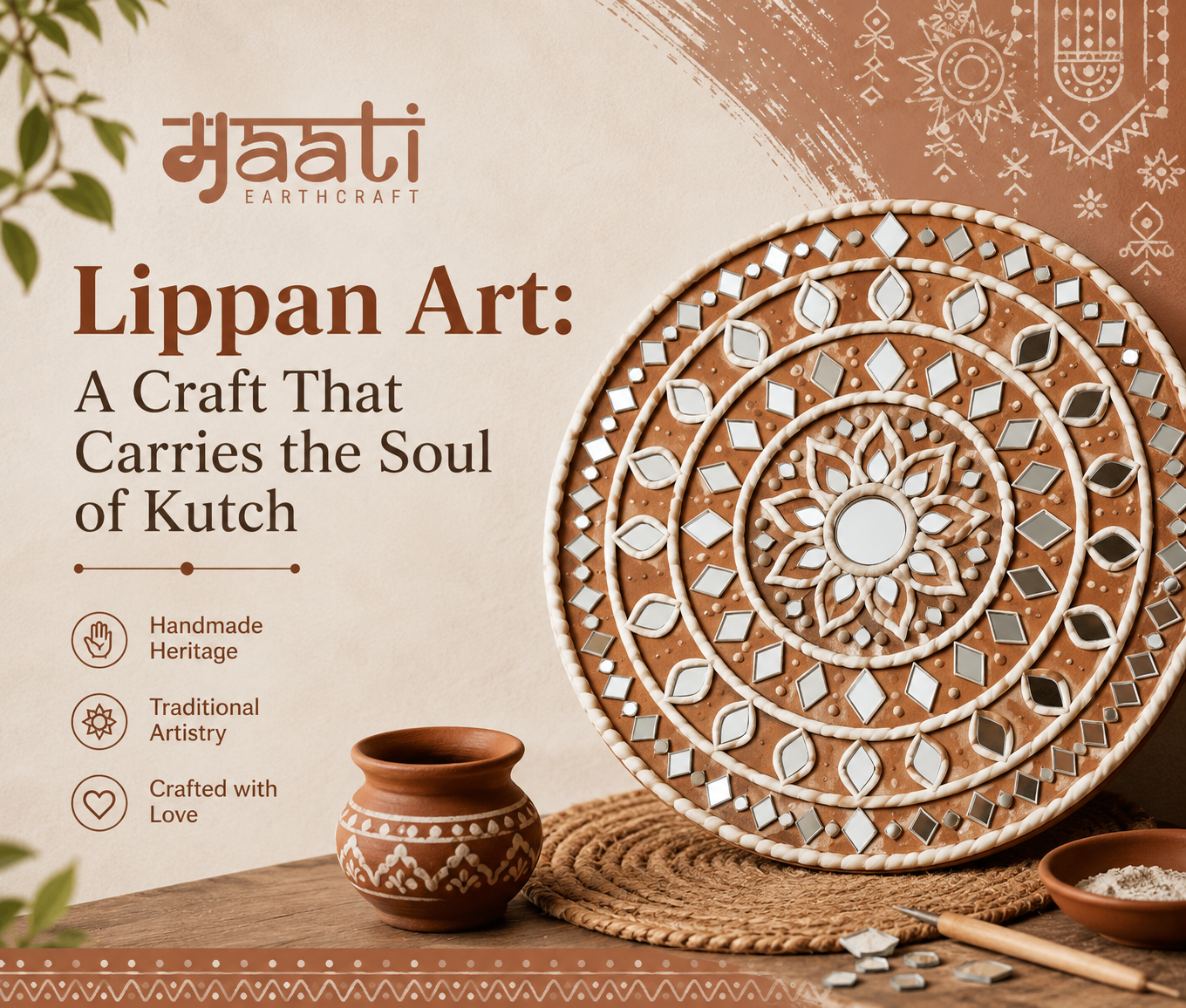
Imagine standing in the vast white desert of Kutch. The landscape stretches endlessly, the sun burns bright, and as evening arrives, the moonlight transforms everything into silver.
Now imagine a home in the middle of this wilderness. No marble walls. No expensive paint. Just earth beneath your feet, clay from the land, and tiny mirrors that catch every ray of light. This is where Lippan Art, also known as Lippan Kaam or Mud and Mirror Art, was born, not as decoration, but as a way of life.
Long before it found its place in modern homes and luxury interiors, Lippan Art was a language of resilience, community, and creativity.
Centuries ago, the villages of the Great Rann of Kutch in Gujarat faced an unforgiving climate. Summers were scorching, winters surprisingly cold, and resources were scarce. The women of communities transformed these limitations into beauty, using a simple mixture of mud, camel dung, and natural fibres, they sculpted intricate relief patterns onto the walls of their circular mud homes, known as Bhungas. Tiny hand-cut mirrors were carefully embedded into these designs.
By day, the mirrors reflected sunlight into the interiors. By night, they shimmered under the glow of oil lamps. What began as functional architecture slowly evolved into one of India’s most distinctive folk art traditions. The assumption of the dimensions of the story begun when
The Art That Refused to Fade
Modern construction gradually replaced mud homes with concrete structures. For a while, Lippan Art seemed destined to disappear. But artisans refused to let their heritage fade.
Instead of limiting the craft to walls, they began creating framed artworks, decorative panels, mirrors, trays, furniture accents, and contemporary home décor. Today, designers across India and around the world celebrate Lippan Art for something remarkable. It feels ancient. Yet it looks effortlessly modern.
Whether your home is minimal, rustic, or contemporary, Lippan Art brings something no factory-made décor ever can, ‘Character.’
Why Lippan Art Feels So Relevant Today
In an era of machine-made décor, Lippan Art reminds us of something we’ve been missing. Human touch. Not because they’re perfect. Because they aren’t. Every handcrafted piece carries subtle imperfections that make it unique.
No mold. No factory repetition. Just patience, craftsmanship, and stories shaped by hand.
It also aligns beautifully with the growing movement towards sustainable living. Crafted using natural materials and traditional techniques, Lippan Art reflects a conscious way of creating, one that respects both culture and the environment. Perhaps that’s why designers, architects, and homeowners are once again falling in love with this centuries-old craft.
You don’t need a mud house in Kutch to experience Lippan Art today. A handcrafted Lippan panel can become the focal point of a living room. A mirror frame can add warmth to a hallway. A statement artwork can transform a quiet corner into a conversation starter. Its earthy palette blends beautifully with wood, linen, stone, and modern neutral interiors.
The mirrors add just enough sparkle without overwhelming the space. Subtle. Grounded. Timeless.
When you bring home a piece of Lippan Art, you’re not simply decorating a wall. You’re preserving a living tradition. You’re supporting artisan communities. You’re choosing craftsmanship over mass production. This belief lies at the heart of Maati Earthcraft, where every handcrafted creation honours tradition, empowers artisans, and celebrates India’s living heritage.